
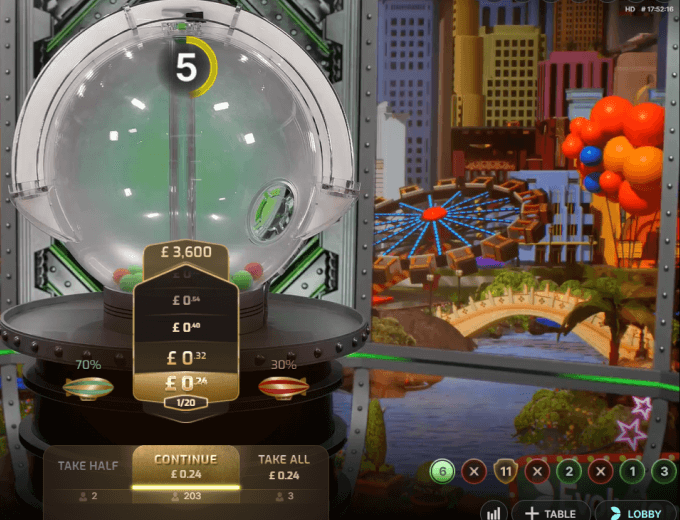
The game cash or crash live operator carves out its own territory in the live game show world. Its magic is found in a strong combination of studio spectacle and game design that makes each round a personal challenge of nerve. This is no a passive spin of a wheel of chance. In this game, you are in control, making active choices that influence your payout. The concept hooks you with an increasing multiplier, then urges you to cash out before a hidden “crash” clears the board. To maximize your experience, you must ignore the glitz and understand its actual mechanics. Let’s analyze the phases, the presenter’s part, the odds involved, and what players can realistically do to steer through the excitement.
The Main Goal and Fundamental Process
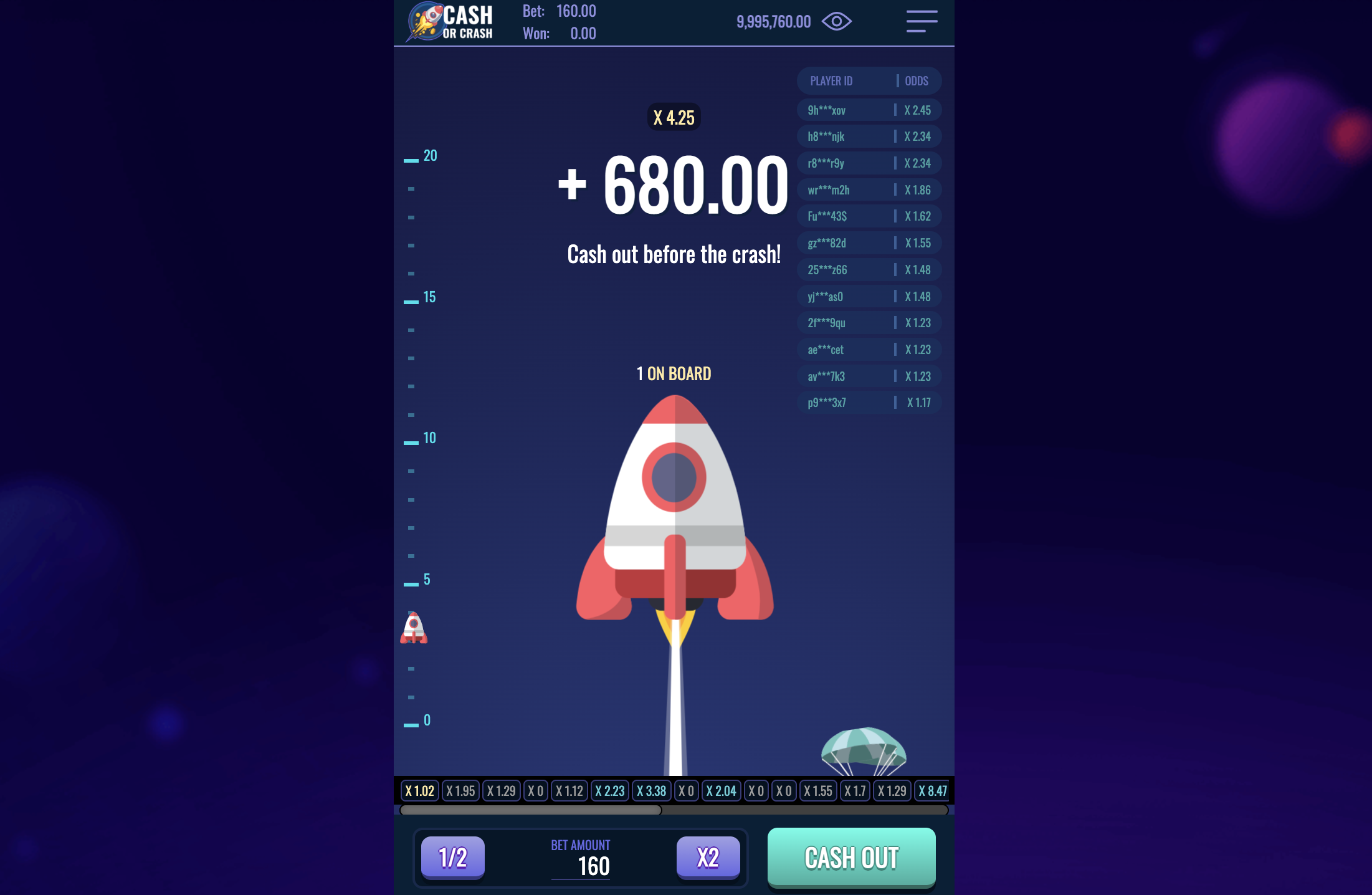
The goal of Cash or Crash Live is easy on the outside. You have to choose when to withdraw a increasing multiplier before a hidden “crash point” ends the round and takes your earnings for that stage. All game commences with players placing bets. A rocket then begins its ascent, and a multiplier begins ticking up from 1x. The trip has several levels. Prior to launch, a random crash multiplier is chosen for every stage, hidden from nobody. As the value rises, every player chooses to hit “Cash Out,” securing that multiplier on their wager, or to remain. If the rocket triggers the hidden crash point prior to a player withdraws, they forfeit their stake for that phase. The loop of hazard and profit occurs over various rounds. Players who survive accumulate their winnings step by step.
Dissecting the Game Phases
View the game as a collection of separate chapters, each a brand new risk. Surviving a crash doesn’t knock you out. You proceed to the next stage with your accumulated winnings secure, then start the risk cycle all over again on the following part of the rocket’s journey. This framework is paramount. It generates a story, with tension that intensifies as you advance. The host heightens the excitement, revealing how many players are still aboard the rocket as the multiplier reaches impressive heights. Initial phases often see cautious plays. Subsequent phases, with their jackpot-level multipliers, lure you to gamble the profit you’ve previously won. This structure is the heart of the game’s excitement. It demands a sequence of individual, stressful decisions instead of just one.
From Low to High Risk: The Risk Escalation
Observe the colorful route the rocket follows. It’s a key part of the game’s visual lexicon. The initial section is typically a “Green Zone,” a lower-risk phase where a crash is still possible. Afterward, the rocket may move into an “Amber Zone,” a clear warning that risk is increasing. The concluding section is the “Red Zone.” In this zone, multipliers appear their best, but the probability of a crash is mathematically at its maximum. Those hues are not just ornamentation. They provide a visual shorthand for the hazard level at any given time. They make an abstract probability feel concrete. Knowing the game is deliberately warning you about increasing uncertainty is a critical piece of tactical knowledge.
Theoretical Basics and Risk
Let’s consider the data that power the game. The multiplier for each level comes from a set probability model. Regular, low multipliers like 1.2x or 1.5x have a high probability of being chosen. Extremely high multipliers are achievable, but they are exponentially more rare. This system ensures the game stable. The frequent, small crashes fund the occasional, large potential wins. The RTP figure is a theoretical percentage over millions of rounds. During one session, the swings are wild. You’re not playing against the casino in a traditional way. You are making decisions against a hidden, random number. Keep these key facts in mind:
- Separate Rounds: Each stage’s crash point is its own event. A crash of 1.2x in round one gives no info about round two.
- No Predictable Sequences: The RNG rules out any predictable sequences. Past crashes or big wins have no bearing on the future.
- House Advantage: The game is designed with an inherent house edge, as reflected in the publicly stated RTP from the developer.
The role of the presenter and RNG
The presenter goes beyond talk. They establish the game’s emotional pace. While they have no impact on the result, they expertly build suspense. They announce the climbing multiplier and offer live updates on what percentage of the crowd is cashing out at each level. That social cue can mess with your head. But remember, the host is separate from the game’s engine: the Random Number Generator (RNG). The crash point for each stage is determined by a certified RNG the instant the stage begins. This ensures fairness and total unpredictability. The host has no clue when the crash will happen. Their job is entertainment. The RNG’s job is certifiable fairness. This combination blends transparent live action with provably random results.
Methodological Structures and User Behavior
No strategy can defeat the inherent randomness. But you can use disciplined approaches to handle your funds and your mental state. The key trade-off is a exchange. Do you guarantee assured gains, or shoot for massive gains? Gamblers often adopt methods like the “Fixed Cash-Out.” With this approach, you choose ahead of time to settle at a specific multiplier, say 2x, in every round. This seeks steady, small gains. The contrary is the “Let It Ride” style, where you risk several rounds for a chance at a huge reward, accepting that crashes will happen. A more measured tactic is the “Percentage Bankroll” method, where you modify your bet size based on your present profits. The biggest factor, though, is in your head. Can you fight the “greed factor” when the payout soars? Can you avoid disappointment after an early crash? Your most powerful tool is creating clear boundaries for yourself before the game even begins.
Common Pitfalls to Steer Clear Of
Look out for a few typical blunders. The most destructive is “chasing” a failure. This signifies rashly boosting your stake after a setback, which goes against the system’s round-independent design. Another mistake is trusting the “hot hand” illusion, assuming a sequence of large ratios is expected to continue. Allowing the host’s banter or the actions of other players divert you from your own pre-set plan is widespread. Also, avoid misinterpreting the sections. The Amber and Red Zones aren’t challenges to overcome. They are alerts that the risk has jumped. Entering any round without a defined objective transforms the activity from a series of choices into a pure emotional rollercoaster. That ride hardly ever concludes favorably.
Conclusion: A Orchestration of Chance and Choice
Cash or Crash Live is a fascinating mix of sheer chance and intentional decision. Its workings are designed to craft a tale of increasing tension, powered by a transparent RNG and brought to life by a engaging presenter. Determining winning as a fun and likely rewarding session hinges on various elements. It’s not so much about forecasting the uncertain and rather about grasping how the game is designed. It requires controlling your funds with restraint and managing the mental inclinations the game skillfully triggers. By learning its phases, respecting its numeric foundation, and following a personal plan, you can alter your outlook. You transition from puzzled uncertainty to informed involvement in a remarkably thrilling live game show.