

For me, knowing how a game works transforms casual play into true appreciation. Classic casino games have stuck around for centuries not solely due to luck, but because they combine clean rules, solid math, and a pace that suits newcomers and strategists alike. When I examine blackjack, roulette, or baccarat, I observe systems that seem simple on the surface but expose layers of depth once you investigate. Every classic title you encounter on ga naar de website rests on a foundation of probability, psychology, and history. I’ll walk you through how these games actually work, eliminating the noise to present the honest engines underneath. This understanding won’t make you a guaranteed winner overnight, but it will change how you think about risk, return, and the real value these games provide when you tackle them with clear eyes.
Craps Action: The Collective Energy of the Dice
Yeah, the craps table—bristling with dozens of betting zones—seems like a mess at first. But the logic underneath is surprisingly straightforward. Everything in craps revolves around the outcome of two six-sided dice. The shooter rolls, and the whole table follows that result. The most basic bet is the Pass Line: it succeeds on a come-out roll of seven or eleven, fails on two, three, or twelve. Any other number becomes the point, and the shooter must roll that point again before a seven shows for the Pass Line to win. The odds bet, which you can place behind hln.be the Pass Line once a point is set, holds zero house edge—making craps one of the rare games with a truly zero-advantage wager. I keep to Pass Line with maximum odds and add a couple of Come bets to remain in the action. The social energy of craps, even on SpinMaya Casino’s live tables, converts solo gambling into a shared journey where wins and losses flow through the digital crowd.
Baccarat game: Grace Through Straightforwardness
From afar, baccarat can look intimidating—exclusive barriers, big spenders—but the rules dispel that intimidation quickly. The game sets two hands against each other: the Player and the Banker. You wager on which one will reach closer to nine, or if it is a tie. Cards 2-9 hold their nominal value, aces count as one, tens and face cards count as zero. If the total goes over nine, only the last digit counts, so a seven and an eight produce five. The drawing uses a set tableau, so no player makes any decisions after placing bets; the cards are drawn according to automatic rules. I appreciate that passive rhythm when I want a game that moves at its own unhurried pace. The Banker bet succeeds slightly more often due to the card rules, and the casino applies a 5% cut on those wins to keep its edge. I admire that baccarat favors pattern observation without demanding difficult math. The game’s simple form is precisely what I’m looking for on nights when I desire the heart of traditional casino drama reduced to its most basic expression.
Distinguishing Between Strategy and Myth
I’ve seen smart people confuse pattern recognition for predictive power in games where every event is independent. The roulette board showing the last twenty results is a history, not a forecast. The blackjack player who stands on sixteen against a dealer ten because it “feels right” is overlooking decades of combinatorial math. I draw a hard line between genuine strategy—which shifts expected value through mathematically sound choices—and superstition, which provides comfort but no edge. In craps, pressing bets during a hot roll feels powerful, but the dice don’t remember the last throw. In baccarat, the bead plate showing Banker and Player streaks is a snapshot of variance, not a roadmap. Embracing this reality doesn’t kill the excitement; it shifts my attention on the parts I can actually control: bet selection, stake sizing, and when to walk away. SpinMaya Casino gives me the tools to track history if I want, but I never confuse the record for a crystal ball.
Video poker: Where Tactics Meet the Monitor
Video poker occupies the space between the isolation of slots and the tactical depth of table games. Titles such as Jacks or Better, Deuces Wild, and Double Bonus Poker begin with a five-card draw from a typical 52-card virtual deck. You select which cards to keep and which to throw away, and the machine deals replacements to form a final hand. Payout tables pay out for pairs of jacks or better and progress through flushes, full houses, up to the royal flush. The strategic depth stems from knowing exactly which hold maximizes expected return for each scenario. Full-pay Jacks or Better, using perfect strategy, can pay back over 99.5%—rendering it one of the most generous bets in the house. I keep a strategy card close at hand for variants I rarely play, because even small missteps in hold decisions can eat into that paper-thin edge. The head-to-head nature of video poker, where my only challenger is the machine’s fixed algorithm, generates a meditative focus I find profoundly satisfying.
Actionable Tips to Start Playing With Confidence
Before you place a single wager on any traditional game, try a short routine that’s prevented me from a ton of rash errors. Check the game’s details or rules panel and read the paytable, the house edge disclosures, and the specific variant rules. A single-zero compared to double-zero roulette wheel alters the odds dramatically, and a blackjack table that gives 6:5 instead of 3:2 for a natural hikes the house edge significantly. Pick a game that matches the session experience you’re after: quiet focus for video poker, communal energy for live craps, or pure visual celebration for slots. Establish your session bankroll, divide it into units, and never risk money you can’t afford to lose. Treat the first few rounds as observation—watch the tempo and how responsive the interface feels. At SpinMaya Casino, demo modes on virtual games enable you to learn for free, and I use those often when testing a new variant. Confidence doesn’t come from knowing you’ll win; it comes from understanding the mechanics so well that no result surprises you or leads to a panicked reaction.
Bankroll Management as a Strategic Tool
No discussion of how standard games operate is complete without the practice of controlling your money across playing periods. I view my bankroll as a limited fund, split into buy-ins, session limits, and win goals. For pure-chance games like roulette or slots, I define a loss limit as a portion of my total bankroll and halt the second I reach it, no matter how enticing the next spin appears. In decision-based games like blackjack and video poker, I change bet sizes based on how confident I sense in the existing situations, though I never pursue losses with foolish jumps. The Kelly Criterion and other staking models present mathematical bet-sizing, but even a straightforward rule of never betting more than one or two percentage points of a session bankroll on a solitary wager holds ruin probability controllable. SpinMaya Casino’s responsible gaming tools allow me establish deposit limits and session timers that streamline this practice. The goal isn’t to eliminate risk—it’s to keep variance from moving me past the threshold where pleasure turns into stress.
21: The Duel Against the Dealer
Let me share the initial thing I tell you about blackjack: you’re not facing the other players. You’re attempting to beat the dealer. Each person gets two cards; the dealer shows one up and keeps one down. The aim is to achieve as close to 21 as possible without going over, while still topping the dealer. Face cards count as ten, aces switch between one and eleven, and all other cards corresponds to its number. The decisions—hit, stand, double down, split—are where the intellectual fun lives. Basic strategy charts, built from computer simulations of millions of hands, tell me the optimal move for every hand against every dealer upcard. Using them eliminates emotional guesswork and lowers the house edge to its theoretical minimum. On SpinMaya Casino, the digital interface often highlights correct plays, but I still choose to memorize the logic because it holds me engaged into the rhythm of the shoe. Blackjack rewards patience, discipline, and the ability to ignore short-term swings.
The Design of Luck and Skill
Classics outlast trends because the odds are obvious, the house edge is manageable, and you get adequate control to make each decision feel genuine. In blackjack, your choices immediately shape the result. Roulette gives almost everything to the wheel, but the wide bet menu lets you build vastly different risk profiles on a single spin. Baccarat stands between them, offering a few simple decisions with some of the lowest built-in advantages in the casino. Craps boosts collective energy, turning what looks like chaotic dice throwing into a game of specific roll probabilities. Slot machines, the most iconic category, developed from mechanical reels into digital engines driven by random number generators, yet their core promise—immediate, uncomplicated resolution—hasn’t budged. Across all these formats, the mechanics are never hidden: paytables, rules, and probabilities are right there for anyone who bothers to read them. I value that honesty because it lets me start every session with a defined plan, not vague hope.
The manner in which the House Edge Operates Across Games
I think of the house edge as not a trick but simply the mathematical cost of playing a game someone else runs. In blackjack, when I stick to perfect basic strategy, the house edge can go below half a percent—so over thousands of hands the casino’s theoretical advantage is razor-thin. A single-zero roulette wheel has an edge of about 2.7 percent; the double-zero version pushes that to roughly 5.26 percent. These percentages do not deduct money from my balance each spin. They illustrate the long-run gap between true odds and the payout odds. Baccarat’s banker bet, after commission, carries around a 1.06 percent edge—one of the most player-friendly wagers I can put. Slots cover a wide range, sometimes as low as two percent or as high as ten percent, depending on the game and jurisdiction. Knowing these numbers never reduces the fun. It offers me a framework for bankroll management. When I sit down at SpinMaya Casino, I know exactly which bets stretch my entertainment budget the furthest, and that knowledge is freeing.
Slot Machines: Luck and Visual Reward
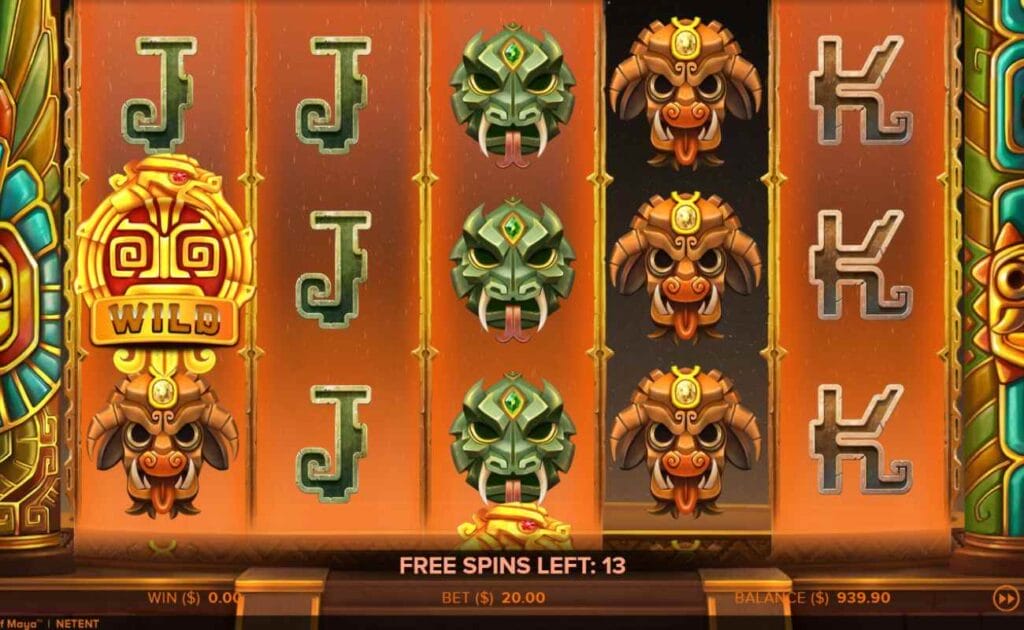
I view slots as the most genuine blend of sheer randomness and sensory payoff. A current video slot operates with a random number generator that processes thousands of number sequences every second, even when nobody is playing. The moment you press spin, the generator selects a value that fixes the reel positions. Paylines, symbols, bonus features—they’re all levels of presentation layered on that core algorithm. Volatility shapes the slot’s whole personality. Low-volatility games pay frequent but modest prizes; high-volatility titles might endure long dry spells before triggering a bonus round worth hundreds of times your stake. Return-to-player percentages, usually between 94 and 97 percent, represent the theoretical long-run payout. I regard slots as entertainment where the cost is the expected loss over time, and the payoff is the chance of a sudden, dramatic spike. SpinMaya Casino’s library includes everything from three-reel throwbacks to complex multi-feature epics with cascading reels, expanding wilds, and narrative-driven progression.
The Future of Classics in a Digital Age
Shifting classic casino games onto digital platforms hasn’t diluted their identity—it has released them from physical limits. I can move from a high-stakes blackjack table to a penny-slot adventure in seconds, adjusting stakes and formats without queuing for a spot. The random number generators that run virtual tables are checked by independent labs, and return-to-player audits are frequently released for anyone to see. Blockchain-based verification and provably fair algorithms are starting to appear in some corners, pushing transparency even further. The classic formats soak up these innovations without cracking, because the core human experiences—anticipation, assessing risk, the joy of a well-timed win—are timeless. SpinMaya Casino consistently integrates new delivery methods while keeping the classic catalog front and center. I anticipate the next decade to bring deeper personalization, augmented reality interfaces, and hybrid formats that merge table games with social features, all still anchored by the rules and rhythms I’ve described.
The Place of Live Dealer Classics Online
Putting real human dealers into the digital space bridges a gap I wasn’t fully aware of until I tried it: the trust gap. When I observe a dealer shuffle and deal physical cards on a high-def stream, the abstract number generation that powers virtual table games receives a tangible anchor. SpinMaya Casino’s live dealer section features blackjack, roulette, baccarat, and game-show hybrids streamed from professional studios. Dealers interact with players, cameras capture multiple angles, and results can be checked against recordings. This transparency doesn’t modify the math, but it strengthens my confidence that outcomes are genuinely random and fair. The social side also turns solo play into something more communal. I can see how others bet, celebrate shared wins, and feel the tempo of a real table without the travel. Live dealer classics demonstrate that the heart of casino gaming doesn’t demand a physical floor—it adjusts smoothly to the connected age.
Why Classic Titles Shape the SpinMaya Experience
When I explore the SpinMaya Casino lobby, the classic games section stands at the center for a reason. These don’t represent dusty relics kept for nostalgia; they’re lively, evolving formats that have shown their staying power across generations and tech shifts. Blackjack whoscored.com tables now provide side bets that add extra volatility onto the core hand, yet still uphold the original dealer-vs-player dynamic. Roulette wheels rotate in European and French variants, the latter incorporating La Partage—which halves losses on even-money bets when zero hits. Baccarat comes in Speed Baccarat and No Commission Baccarat, adjusting rhythm and payouts to suit different moods. Slots pull from an endless well of themes and mechanics, but the basic appeal of spinning reels and matching symbols never alters. I choose SpinMaya because the platform displays these classics with clear interfaces, fair certification, and responsive support—all of which count when you take your understanding of game mechanics seriously.
Roulette: The Wheel’s True Mathematics
There’s nothing quite like watching the ivory ball travel around the track and drop into a numbered pocket. That moment of suspense is unmatched. The classic European roulette wheel has 37 pockets (zero through 36), while the American version adds a double zero for 38. Inside bets (straight-up, split, street, corner, six-line) return more because they encompass fewer numbers and hit less often. Outside bets on red or black, odd or even, and high or low return even odds and prevail about 48.6% of the time on a single-zero wheel. I never pretend any betting system can defeat the house edge in roulette; the wheel has no memory, each spin is independent. But I utilize outside betting patterns to pace my session and spread my bankroll across dozens of spins. Roulette’s transparent payout structure positions it as a great starting point for observing how probability converts to money. At SpinMaya Casino, the live dealer streams deliver that physical authenticity to my screen with zero compromise in video quality.